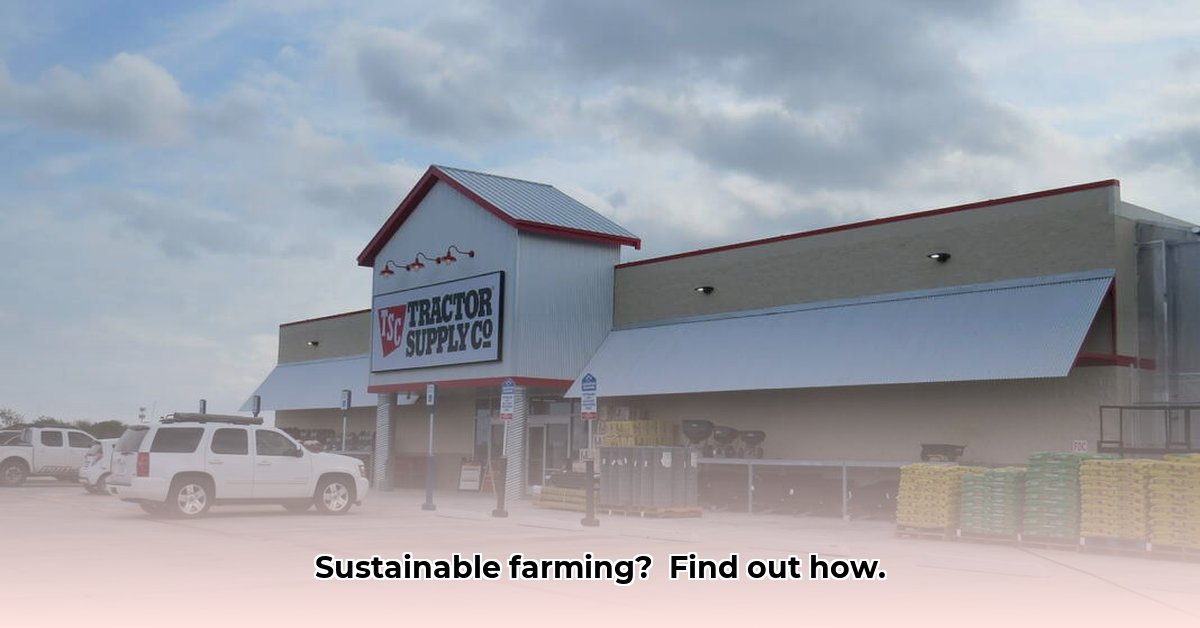
Growing food sustainably in Burkburnett presents unique challenges, demanding innovative solutions and resourceful planning. This guide analyzes Tractor Supply's role in supporting local farmers' transition to sustainable agriculture, highlighting areas for improvement and providing actionable steps for all stakeholders. For more on Tractor Supply's distribution network, see their distribution center information.
Tractor Supply's Current Offerings: A Mixed Bag
Tractor Supply Burkburnett offers a wide range of agricultural products—from seeds and fertilizers to animal feed and tools—essential for farming operations. However, its commitment to explicitly sustainable practices is less clear. While basic necessities are available, a dedicated section highlighting products specifically designed for sustainable farming (organic seeds, water-efficient irrigation systems, compostable materials) is currently lacking. This limits the store’s capacity to actively support environmentally responsible farming. The current product range emphasizes quantity over a curated selection of eco-friendly options, making it difficult for farmers to quickly identify sustainable choices. This lack of clear labeling and promotional emphasis on sustainable goods represents a substantial missed opportunity.
Burkburnett Farmers: Navigating Water Scarcity and Soil Erosion
Burkburnett farmers contend with significant agricultural challenges, primarily water scarcity and soil erosion. The region's climate, likely characterized by periods of intense heat and infrequent rainfall, exacerbates these issues, directly impacting crop yields and long-term land health. Farmers constantly seek ways to maximize yields while minimizing environmental damage, striving to balance profitability with sustainability. This requires carefully balancing resource use with yield optimization. The adoption of new, sustainable techniques may be hindered by unfamiliarity or cost concerns for some farmers.
Actionable Steps for Burkburnett Farmers: Maximizing Sustainability
Farmers can implement several practices to enhance their sustainability, even with resource constraints:
Precision Fertilizer Application: Optimize fertilizer use through soil testing and variable-rate application, minimizing waste and runoff. (This reduces environmental impact while maximizing nutrient uptake.) Studies show this method can reduce fertilizer use by up to 30%.
Diversify Your Suppliers: Explore additional sources for organic seeds, compost, and other sustainable inputs to ensure product availability and compare pricing and quality. This proactive approach enhances resilience to supply chain disruptions.
Water-Wise Farming: Employ drip irrigation, rainwater harvesting, or other water-efficient techniques to conserve water resources. This is vital in water-stressed regions and can significantly improve water use efficiency.
Enhance Soil Health: Implement cover cropping, no-till farming, and crop rotation to improve soil structure, fertility, and water retention. These practices build long-term soil health and reduce dependence on chemical inputs.
Diversify Crop Selection: Planting a mix of crops reduces the risk of losses from pests, diseases, or adverse weather conditions, enhancing overall farm resilience.
Actionable Steps for Tractor Supply Burkburnett: A Call for Proactive Engagement
Tractor Supply can play a pivotal role in promoting sustainable farming practices. This requires a more proactive approach:
Conduct a Needs Assessment: Survey local farmers to identify their specific needs and preferences regarding sustainable products and services. This crucial step ensures the store stocks relevant items.
Expand Sustainable Product Selection: Significantly increase the range of organic and sustainably produced goods, including organic seeds, bio-fertilizers, and water-efficient irrigation equipment. Clearly label these products and actively promote them.
Partner with Local Experts: Collaborate with local agricultural extension services and environmental organizations to offer workshops and educational resources on sustainable farming techniques.
Promote Transparency: Clearly communicate the store's sustainability initiatives, enhancing consumer awareness and trust. Publicly sharing a sustainability report would build confidence.
Support Local Initiatives: Partner with local farmers' markets or co-ops to provide a platform for local, sustainably grown products.
Actionable Steps for Local Government and NGOs: Facilitating a Sustainable Future
Local government and NGOs can significantly contribute to sustainable agriculture:
Fund Educational Programs: Provide financial support for workshops and training on sustainable farming practices, focusing on areas like water conservation and organic farming.
Advocate for Supportive Policies: Lobby for policies that incentivize sustainable agriculture, such as tax incentives or grants for farmers adopting eco-friendly methods.
Promote Research and Development: Fund research into drought-resistant crops suitable for the local climate, furthering agricultural innovation and resilience.
Conclusion: A Collaborative Path Towards Sustainability
Sustainable agriculture in Burkburnett demands a collaborative effort between farmers, Tractor Supply, local government, and NGOs. By working together, a more resilient and environmentally friendly agricultural system can be created. Further research is needed to fully understand the complexities of sustainable agricultural practices in this specific region, informing future strategies and initiatives. The success of Burkburnett’s agricultural future depends on a collective commitment to environmentally sound and economically viable practices. More research into the specific impacts of climate change on Burkburnett’s farming practices is crucial.